Daily Word Challenge
Apollo Mobile GamesWord
4.2497.00 Reviews
- Version
- 2.5.0
- Installs
- 1.00M
- Age Rating
- Everyone
Screenshots
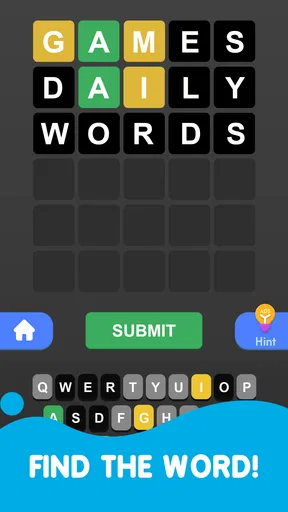
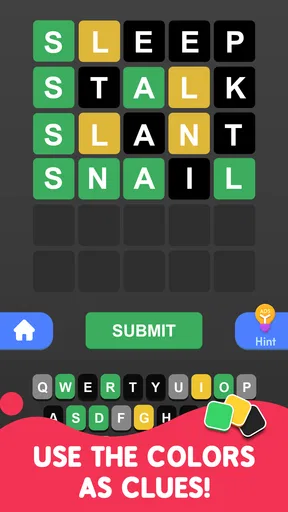
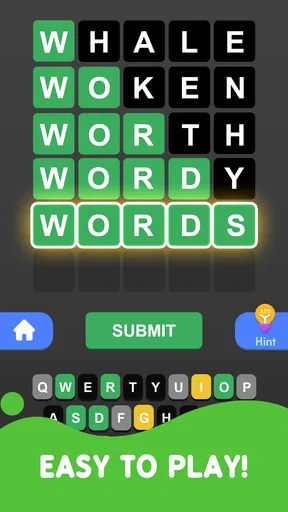
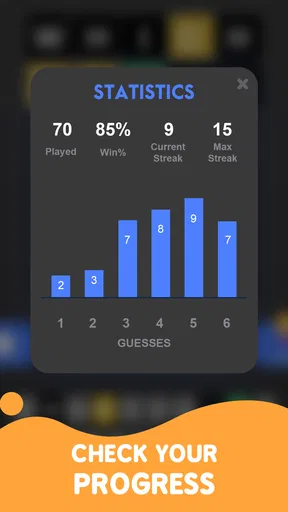
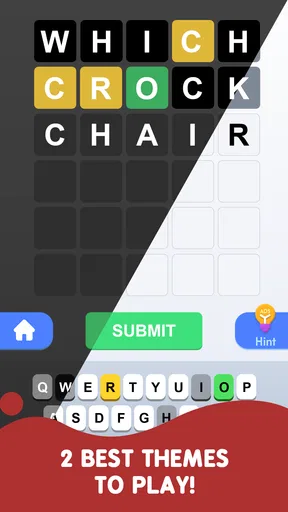
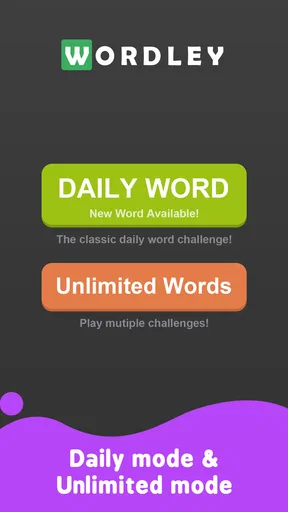
Our Review of Daily Word Challenge
 Analysis by Appyee
I tend to return to word games when I want something short, quiet, and easy to share with someone nearby. Daily Word Challenge fits that mood well, especially on a household tablet or a phone that several people use at different times. It is a free word game from Apollo Mobile Games, built around solving words rather than managing a large world, a long campaign, or a complicated set of rules. I found it approachable within moments, but still useful as a small daily mental workout.
The most important difference is its open-ended format. Instead of making me wait for one puzzle to become available, it lets me keep playing with unlimited words and no daily limit. That changes the way I use it. I can play one round while coffee is brewing, hand the device to someone else, or continue for longer when I am in the mood. The freedom is appealing, although it also removes the natural stopping point that makes some familiar word games feel like a neat daily ritual.
A word game that works well on a shared household device
In my experience, the best shared-device games are the ones that do not require a long explanation before another person can try them. This one has that advantage. A family member can pick up the phone, understand the basic word challenge, and begin without needing to learn a character system, a complicated menu, or a detailed story. That makes it a comfortable choice for a quiet break in the living room or for passing time during a short wait.
I can imagine a realistic household routine where one person plays a few attempts in the morning, another tries later in the afternoon, and a child or grandparent explores it in the evening. The game’s simple word-focused design makes those handoffs less awkward than they would be in a game that depends heavily on personal progress. It feels more like a shared puzzle object than a private long-term adventure.
There is a useful trade-off here. A shared device can make the game more social, but it can also blur who is actually playing. If several people use the same installation, I would not treat the visible progress or result as a reliable household record unless everyone agrees on a simple routine. For example, each person could take a turn in a fixed order, or use a small paper note to record whose attempt it was. That is not a feature of the game; it is a practical way to prevent casual confusion.
For a couple or family that enjoys comparing guesses, the unlimited format is more flexible than a one-puzzle-per-day model. Someone who finishes quickly does not have to stop while another person is still interested. On the other hand, people who enjoy the shared suspense of waiting for the next official puzzle may find the open supply less special. I would choose this game for relaxed, repeatable play rather than for a tightly synchronized daily competition.
What to decide before installing it on a shared phone
Because the game is free, trying it does not require a purchase decision at the start. That makes it easy to test on an older household phone or a tablet that is already used for casual entertainment. The Android requirement is version 7.0 or later, so the practical first step is checking whether the intended device can run it. The current release is version 2.5.0, which is useful to know when troubleshooting an installation or comparing what appears on different devices.
I would also decide who the device belongs to before treating the game as a family activity. On a personal phone, the experience is straightforward: install it, play when convenient, and keep the device’s normal boundaries intact. On a shared tablet, it is better to agree that the game is for short turns rather than allowing it to become an unplanned source of arguments over screen time. The unlimited format makes this conversation more important than it would be with a game that naturally ends after one puzzle.
There is another small boundary worth setting: do not assume that a shared installation creates separate player identities. I would avoid promising children that the game will preserve individual records, and I would not use it as a substitute for a family account system. If personal progress matters, each person should use an agreed method outside the game to mark their own results. This keeps expectations realistic and avoids blaming the app for a problem caused by sharing one device.
The optional spending model also deserves a calm conversation. The game is free to download and use, while in-app purchases are listed at $7.49 per item. I would make sure the device owner understands that free installation does not automatically mean every optional purchase is irrelevant. On a child-accessible device, the responsible adult should handle the store account and purchasing permissions in the usual way. That is a general household precaution, but it matters more when a game is available to play repeatedly.
How I would coordinate turns and results
Unlimited play is most enjoyable when the household gives it a little structure. One approach is to use it as a five-minute challenge: each person gets a short turn, then everyone compares how they approached the word. Another is to let one person choose the time of day and invite anyone nearby to join. Since the game is not tied to a single daily opportunity, nobody has to be awake or available at a particular moment.
I like the idea of separating practice from competition. A person who is still learning common spelling patterns can play freely without feeling that every attempt affects a family ranking. More experienced players can then use a separate round for friendly comparison. This is a better arrangement than forcing every player into the same standard, especially when ages and vocabulary levels differ.
A useful habit is to discuss the reasoning, not only the result. After a round, a player can explain why a particular letter pattern seemed promising or why an early guess was misleading. That turns a short game into a conversation about spelling, word construction, and deduction. It also helps younger players participate without making the activity feel like a lesson. I would keep the tone light, because the game works best as a voluntary break rather than a test.
For people who prefer a private routine, I would use the unlimited access differently. A player can complete one or two rounds during a commute break, then stop before the game starts feeling repetitive. Since there is no daily limit to enforce a stopping point, setting a personal limit is helpful. This is one of the main differences from the usual daily word format: the app gives me more freedom, but I have to supply more discipline.
Households should also remember that coordination can become inconvenient if one person expects a particular result to remain available for everyone else. I would not plan a formal family tournament around an assumed shared puzzle state unless the group has tested how the game behaves on its devices. The safer approach is to treat each person’s session as an individual turn and compare impressions afterward. That preserves the social element without relying on features the game does not present as a family system.
Age, trust, and the kind of supervision that makes sense
The content rating is Everyone, which matches the straightforward nature of a word challenge. I would feel comfortable considering it for a broad household audience, including adults who want a calm game and younger players who can already engage with word puzzles. Still, an Everyone rating does not settle every family question. Parents may care about time spent, access to purchases, and whether a child is using a shared device responsibly. Those concerns are handled through household rules and device settings, not by assuming the game will manage them automatically.
For younger children, I would introduce it as an optional vocabulary and reasoning activity rather than as a performance measure. Some children enjoy experimenting with guesses; others may become frustrated when a word does not come quickly. A parent or older sibling can make the first few sessions more comfortable by playing alongside them and showing that an unsuccessful attempt is part of the process. The game’s simple premise helps here because the adult does not need to explain a large fictional setting before offering support.
Older family members may appreciate the low-pressure format as well. Someone who does not play action games can still understand the purpose immediately, and the short sessions make it less demanding than a lengthy campaign. I would especially consider it for a shared tablet in a household where people have different gaming tastes. It gives them a common activity without requiring everyone to enjoy the same genre.
Trust also matters when a child uses an adult’s phone. I would make the boundary clear: the child may play the word game, but should not explore unrelated store pages or change device settings. Since the game includes optional purchases priced at $7.49 per item, the adult should keep purchasing under control and explain that tapping through a game does not authorize spending. This is a sensible boundary for any free-to-play title and is particularly easy to communicate when the game itself is simple.
I would skip this game for a household looking for strong built-in parental management, detailed player profiles, or a carefully separated multi-user environment. Nothing about its basic identity suggests that it is designed to replace those tools. It is better viewed as a casual word activity that happens to work well on a shared device when the people using it already have clear expectations.
Where it stands beside familiar word-game alternatives
The obvious comparison is with the familiar daily word puzzle. Daily Word Challenge keeps the recognizable appeal of guessing a hidden word, but removes the pressure of waiting for one official attempt each day. That is a genuine advantage for me when I want more practice or when different people in the household are available at different times. It is also helpful for learners who need several rounds before the patterns become comfortable.
The downside is that unlimited access can weaken the sense of occasion. A daily puzzle has a built-in rhythm: play once, think about it, and return tomorrow. Here, I can continue immediately, which is convenient but less ceremonial. If your favorite part of a word game is sharing one common daily result with friends, a stricter daily alternative may feel more satisfying.
Compared with crossword apps, this game is easier to enter but less suited to someone who wants a broad clue-solving session. Crosswords usually ask me to move between clues, themes, and levels of difficulty. This experience is more focused. I would recommend it to a person who wants quick word deduction rather than a longer newspaper-style puzzle.
Compared with anagram games, it offers a different kind of mental work. Anagram play often rewards finding as many combinations as possible from a set of letters, while this format centers attention on narrowing down a target word. That makes it a good choice for a player who enjoys eliminating possibilities and testing letter placement. Someone who prefers rapid word production may find an anagram-focused game more energetic.
It is also less expansive than a spelling game designed as a structured course. I would not install it expecting lessons, a classroom progression, or a detailed vocabulary curriculum. Its strength is repetition without ceremony. That simplicity is exactly why it suits a shared household moment, but it also means players seeking deep educational scaffolding should look elsewhere.
Small habits that make repeated play more rewarding
My first practical tip is to avoid using the unlimited format as a race. Taking a few seconds to classify a guess by letter position can make each round more satisfying than firing off random words. On a shared device, this also gives other players time to observe the reasoning rather than watching someone rush through attempts. The game becomes more interesting when the household treats it as a thinking exercise instead of a speed contest.
My second tip is to vary the setting. A short solo round works during a break, while a collaborative round works better when everyone can see the screen and discuss possibilities. I would not use the same expectations for both. Solo play is about concentration; shared play is about explaining choices and keeping the mood friendly. This distinction helps prevent a casual family activity from turning into an argument over who is better at words.
My third tip is to create an external record only if it adds enjoyment. A simple notebook can track personal bests, favorite discoveries, or words that caused trouble. I would not treat that notebook as an official score system, because the app is not being used as a dedicated family league in this setup. The record is valuable mainly because it gives children and adults something to discuss and makes improvement visible over time.
Another useful approach is to pair the game with a break rather than with a reward that must be earned. For example, a parent might invite a child to play one round after homework, but should avoid turning every result into a judgment about intelligence. Word puzzles can be encouraging when they invite curiosity and discouraging when they become another source of pressure. The app’s light format gives families room to choose the healthier approach.
I would also be selective about who gets unlimited access on a personal device. People who already lose track of time in repeatable games may prefer a stricter daily alternative. The absence of a daily limit is a benefit for flexible households, but it can be a weakness for anyone who relies on the app to enforce moderation. Setting a timer or deciding on a fixed number of rounds before opening the game is a simple way to keep it in proportion.
Who should use it, and who should pass
I think it is a strong fit for someone who likes word guessing, wants short sessions, and dislikes being told to wait until tomorrow. It also suits households with mixed gaming experience because the central idea is easy to explain. A free price makes experimentation straightforward, and the Everyone rating supports its role as a broadly accessible casual game. The average rating of 4.2 from around 7.2 thousand ratings suggests that many players find the overall experience appealing, while the scale of more than one million installs shows that it has reached a substantial audience.
Those figures are useful context, but they do not replace personal fit. A player who needs advanced difficulty controls, formal multiplayer, separate family profiles, or a long progression system may be disappointed. I would also hesitate to recommend it to someone who only enjoys word games with a strong narrative or a carefully curated daily event. The unlimited design is the central idea, so people who prefer scarcity and routine should think twice.
For a household, I would install it when the goal is occasional shared play on a compatible Android device, with adults handling account and purchase boundaries. I would not present it as a complete family-management solution or as a substitute for educational software. It is a small, accessible game that can support conversation, practice, and a few minutes of concentration.
My overall impression is positive because the format respects the way people actually use casual games. I can play briefly, continue when I have time, or let someone else take a turn without worrying about a single daily window. The main limitation is that the same freedom requires the household to manage turns, expectations, and screen time on its own.
For me, that is a fair exchange. Daily Word Challenge is at its best as a flexible shared word game, not as a full family platform. If you want unlimited practice and an easy activity for different ages, I would recommend giving it a try. If your priority is strict daily structure, individual account boundaries, or deep puzzle progression, a more specialized alternative will probably serve you better.
Verdict
Strengths of Daily Word Challenge
- Short daily puzzles fit easily into a busy schedule.
- Improves vocabulary through repeated word exposure.
- Simple interface is suitable for a wide range of ages.
- Daily goals encourage a consistent learning habit.
- Works well as a quick offline-friendly mental break.
Limitations of Daily Word Challenge
- Some challenges may feel repetitive after extended use.
- Difficulty can vary noticeably from one day to the next.
- Limited content may reduce long-term replay value.
- Hints can make the puzzles feel less rewarding.
- Ads may interrupt the experience in the free version.
Similar Picks in This Category
View All
Word Search - Word Puzzle Game
Bluetile4.8

Word Search Quest - Puzzles
Blackout Lab4.8

CodyCross: Crossword Puzzles
Fanatee, Inc.4.7

Words of Wonders: Crossword
Fugo Games4.9

Wordscapes: Word puzzle game
PeopleFun4.7

Word Search Explorer
PlaySimple Games4.9
Frequently Asked Questions
What is Daily Word Challenge?
Daily Word Challenge is a word-puzzle game designed for players who enjoy testing their vocabulary, spelling, and logical thinking. It typically presents a new challenge each day, encouraging users to form words, solve clues, or complete letter-based puzzles. The daily format makes it easy to play in short sessions while also giving players a reason to return regularly and maintain a consistent streak.
How does the gameplay work?
The gameplay in Daily Word Challenge is generally simple to understand, even for casual players. You receive a word-related puzzle and must use the available letters, clues, or hints to find the correct answer. Depending on the challenge, success may depend on vocabulary knowledge, recognizing word patterns, or solving the puzzle within a limited number of attempts. The difficulty can increase as you progress.
Can I play Daily Word Challenge without an internet connection?
Offline availability may depend on the version of Daily Word Challenge installed and how the game delivers its daily content. Some basic features or previously loaded puzzles may remain accessible without an internet connection, but daily updates, advertisements, leaderboards, cloud synchronization, or new challenges may require online access. It is best to open the game while connected before traveling or playing without mobile data.
Is Daily Word Challenge free to download and play?
Daily Word Challenge can generally be downloaded at no initial cost, allowing users to try the core word puzzles without purchasing the application. However, the free version may include advertisements, optional hints, extra lives, or other in-app purchases. Before downloading, check the store listing for the current pricing details, available subscriptions, and whether any features are restricted behind payments.
Is Daily Word Challenge suitable for children and language learners?
Daily Word Challenge can be useful for children, students, and language learners because it encourages spelling practice, vocabulary development, and careful reading. Nevertheless, suitability depends on the child’s age, reading level, and the words included in the puzzles. Parents should review the game’s content, advertising, privacy settings, and in-app purchase options before allowing younger users to play independently.
Play our best games!


